An MBA curriculum in books, for people who already have a job.
Twelve core courses. For every book: who should read it, who should skip it, and what to read instead. Picked by Antoine Marchand, thirty years in commercial leadership.
The twelve core courses
- General ManagementHow the general manager's job actually works: time, team output, transitions and the whole-business view.
- Accounting for ManagersRead the three statements, see where the numbers are judgment, and ask better questions of finance.
- Corporate FinanceValuation, cost of capital and capital allocation: how to judge an investment before you approve it.
- StrategyTell a real strategy from a budget with goals attached, and understand where durable advantage comes from.
- MarketingPositioning, growth and customer insight: what a general manager needs to judge a marketing plan.
- OperationsBottlenecks, flow and lean: how work actually moves through a business, and where it gets stuck.
- Leadership and Organisational BehaviourHow senior people spend their time, run teams, take over new roles and lead change that people resist.
- NegotiationPreparing for deals with suppliers, customers, partners and colleagues, and holding your ground when the other side plays hard.
- Managerial EconomicsPrices, costs, competition and incentives: the economics behind pricing decisions, bids and market entry.
- Data and Decision-MakingStatistics, measurement, forecasting and judgment: how to decide well with imperfect data and not be fooled by it.
- EntrepreneurshipCustomer discovery, experiments, fundraising and the hard parts of running a young company, inside or outside a corporation.
- Ethics and GovernanceHard choices between two rights, how companies and boards fail, and how a board should work with its CEO.
Start here: the MBA in 12 books
One book per core MBA course, in the order I would read them: from the shape of a business to finance, strategy, people, decisions and ethics.
- 1. The Personal MBA
- 2. Financial Intelligence
- 3. The Little Book of Valuation
- 4. Good Strategy Bad Strategy
- 5. Influence
- 6. The Goal
- 7. High Output Management
- 8. Getting to Yes
- 9. Naked Economics
- 10. Thinking, Fast and Slow
- 11. The Lean Startup
- 12. Why Smart Executives Fail
See the full sequence and why
Latest reviews
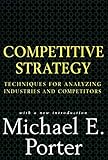
Michael E. Porter · 1980
The 1980 text that gave strategy the five forces and the generic strategies. Long and dense, but reading the original shows you what every later framework took from it and what the slide versions leave out.
Advanced · about 16 h · $$
Read my reviewView on Amazon
Reviewed October 25, 2026

Karen Berman & Joe Knight · 2006
The finance book I would hand to any newly promoted manager who now owns a budget or a P&L. Plain English, and honest about where the numbers are judgment rather than fact.
Foundation · about 7 h · $
Read my reviewView on Amazon
Reviewed October 25, 2026

Roger Fisher, William Ury & Bruce Patton · 1981
The book that gave negotiation its working vocabulary: interests over positions, options, objective criteria and BATNA. Strong as a framework for repeated dealings, light on counterparties who play hard.
Foundation · about 5 h · $
Read my reviewView on Amazon
Reviewed October 25, 2026

Richard Rumelt · 2011
The most useful strategy book for a working executive. Rumelt gives you a three-part test (diagnosis, guiding policy, coherent action) that exposes most annual plans as goals dressed up as strategy.
Core · about 9 h · $
Read my reviewView on Amazon
Reviewed October 25, 2026

Andrew S. Grove · 1983
The operating manual for middle and senior managers. Grove treats management as production, and the approach works best for managers of managers who think in systems.
Core · about 8 h · $
Read my reviewView on Amazon
Reviewed October 25, 2026
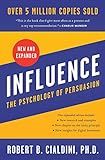
Robert B. Cialdini · 1984
The classic on why people comply: reciprocation, commitment, social proof, liking, authority, scarcity and, in the new edition, unity. Read it to use the principles honestly and to spot them when they are used on you.
Foundation · about 9 h · $
Read my reviewView on Amazon
Reviewed October 25, 2026
One book, one framework, every two weeks
A short email: the book, the one idea worth keeping, and how to use it at work. No spam, unsubscribe in one click.